PointWake logo

Chiropractic Operations

Chiropractic CRM & Automation Services

PointWake helps chiropractic practices move new-patient inquiries to a booked visit without relying on the front desk's memory. We set up follow-up, status tracking and staff handoffs around the way your practice already works, including practices with more than one location.

This is administrative work. Diagnosis, care-plan decisions and clinical questions stay with your doctors and team.

or call (830) 302-3193

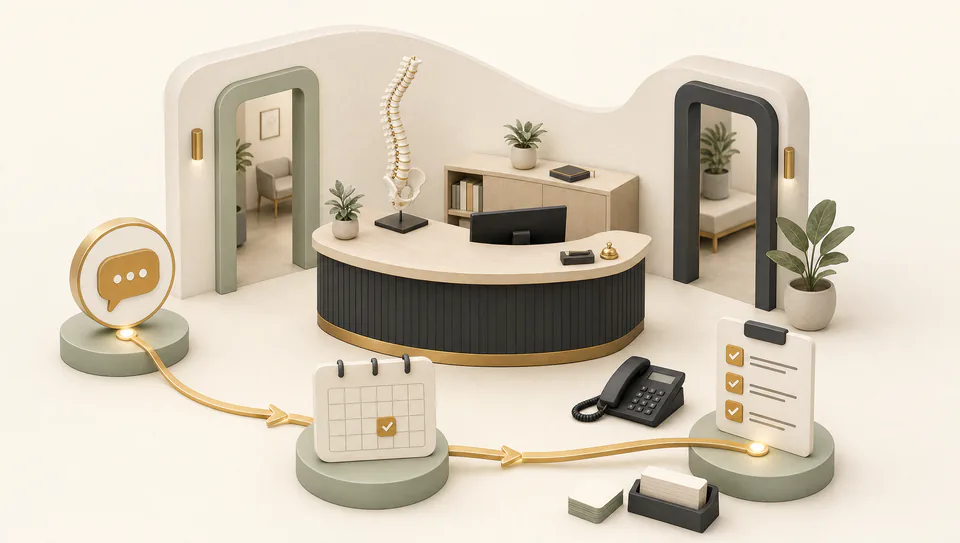
Illustration of a chiropractic front desk between two treatment rooms, with a message icon, a calendar and a checklist joined by a gold path.

Choose your first workflow

These are common starting scopes, not packages or promised results. We agree on the first launch around the bottleneck your front desk actually has, then add more once it works.

  • New-inquiry follow-up

    New calls, forms and texts get an approved first reply and a front-desk task. Follow-up stops when the person books, replies or opts out.

  • Routing between clinics

    Each inquiry is tagged to a clinic and assigned to that clinic's owner. Inquiries with no clear location go to a shared triage owner.

  • Canceled and missed-visit queue

    Visits staff mark canceled or no-show land in one queue with an owner, so each one gets a rescheduling call or approved message.

Implementation example: Premier Chiropractic

Client implementation

Premier Chiropractic runs two clinics. We customized its automation and follow-up around the team's daily workflow, including follow-up with inquiries that had gone quiet or had not been followed up.

A shared dashboard brings together appointment statuses, patient progress stages and replies across both clinics, with stages such as contacted, canceled, no-show and cold lead.

This example describes the implementation; measured results are not published.

Read the Premier Chiropractic story

Where chiropractic front desks lose track

These are common points to review between a first inquiry and an attended visit.

  • Calls and web inquiries that arrive during adjustments or after hours and wait for a callback.
  • Appointment requests that are never confirmed, and confirmed visits that are never marked attended or missed.
  • Canceled and no-show visits that need a person to reach out, not another automatic text.
  • Leads that went quiet with no clear owner.
  • Two locations with separate calendars and no shared view of who needs attention.

What stays with your practice

  • Diagnosis, treatment and care-plan decisions.
  • Answers to clinical questions, by phone, text or in person.
  • Clinical records and notes, in the system you already use.
  • Approval of message templates and sending rules before launch.

Chiropractic follow-up workflows we configure

Each workflow has a clear trigger, an automated step, a person who takes over and a rule for when it stops. These are starting points that we set to your hours, locations and approved wording. Not every practice needs all of them.

Scheduled messages check the current status before they send. If a patient has already booked, replied or opted out, or staff changed the status, the next message does not go out and the item escalates to staff when needed.

Missed and after-hours inquiries

Trigger
A call is missed, or a web form or text arrives while the front desk is busy or the office is closed.
Automated step
The person gets an approved text confirming the message was received, with a way to request a visit. The inquiry is logged with its location and source.
Staff handoff
A callback task appears in the right location's front desk queue for the next business hours.
Stops when
The person replies, requests or books a visit, or opts out, or staff close the task.

Appointment request to confirmed visit

Trigger
A new patient asks for an appointment by form, text or phone.
Automated step
The request goes to the location's scheduling owner, and the patient is told staff will confirm a time. Once staff mark the visit confirmed, standard reminders are scheduled.
Staff handoff
Staff confirm the time in your scheduling system and update the status. Requests still unconfirmed after your set window are flagged.
Stops when
The visit is confirmed or declined, the patient opts out, or staff close the request. Reminders stop or move if the visit is canceled or rescheduled.

Canceled and no-show follow-up

Trigger
Staff mark a visit canceled or no-show.
Automated step
One approved message offers help with rescheduling. There are no repeated nudges.
Staff handoff
If there is no reply within your set window, a follow-up task goes to the location's owner.
Stops when
The patient replies or rebooks, or opts out, or staff close the task. A new booking cancels any pending follow-up.

Queue for quiet and unfollowed leads

Trigger
An inquiry has no reply, booking or staff activity after the period you choose.
Automated step
The lead moves into a review queue instead of receiving more automatic messages.
Staff handoff
A named team member reviews the queue on a set schedule and decides to call, send one approved message or close the lead.
Stops when
Staff take an action or close the lead, or the person replies, books or opts out.

Two-location routing and reporting

Trigger
An inquiry names a location, or comes in through a location's phone number or page.
Automated step
The inquiry is tagged to that location and assigned to its owner. Inquiries with no clear location go to a shared triage owner.
Staff handoff
Each front desk works its own queue, and practice owners see both locations on one dashboard.
Stops when
Ownership only changes when staff reassign it.

An illustrative new-patient journey

Illustrative example

  1. Inquiry

    A prospective patient calls during adjustments and the call is missed. They get an approved text, and the inquiry is logged.

  2. Location and availability

    The text asks which location they prefer. Their reply routes the inquiry to that location's front desk queue.

  3. Appointment request and confirmation

    Staff call back, offer times from that location's calendar and mark the visit confirmed.

  4. Reminder

    A reminder goes out before the visit. If staff reschedule, the reminder moves to the new time.

  5. Staff follow-up if canceled or missed

    If the visit is marked canceled or no-show, one rescheduling message goes out and staff get a task. Any clinical question in a reply goes to the practice team.

Timing, wording and steps are set with your team.

Working with your scheduling and clinical systems

Your scheduling and clinical systems stay the source of truth for appointments and patient records. We do not replace them, and follow-up workflows do not hold clinical notes.

Before connecting any tool, we check what it supports: available APIs or exports, the access your account allows and which system owns each status. ChiroTouch, Jane and similar tools are not connected by default. If a supported connection is not available, staff update a few key statuses by hand and the follow-up still works.

Follow-up runs on PointWake CRM. We use AI automation only where it removes repeated admin steps, and an AI receptionist can answer routine after-hours booking questions with approved answers.

Keep clinical details out of automated texts and emails. If your workflows involve patient health information, we review privacy requirements with you before launch.

What PointWake builds for your practice

  • Workflow map

    Each step from first inquiry to attended visit, for every location.

  • Stages and owners

    Statuses such as requested, confirmed, attended, canceled and no-show, each with a named owner.

  • Approved message templates

    The text and email templates your team approves before launch.

  • Configured workflows

    Triggers, waits and stop rules set to your hours, locations and scheduling setup.

  • Exception queue

    One place for quiet leads, unconfirmed requests and replies that need a person.

  • Team training and handoff notes

    A walkthrough for the front desk and written notes on how each workflow behaves.

What we need from you

  • The channels inquiries arrive through: phone numbers, web forms, text and any booking links.
  • Office hours and holiday rules for each location.
  • Your calendars or scheduling system, and who confirms visits.
  • The tools you use now, with the access needed to review them.
  • One staff owner who can make day-to-day decisions.
  • Message wording you approve, or time to review our drafts.
  • Any data you already have, such as recent inquiry lists or appointment status exports.

How implementation works

  1. Discovery

    We review your channels, tools, data and current follow-up with the people who do the work. Scope, timing and price are agreed in writing after this step, not before.

  2. Build

    We configure stages, owners, the approved message library and the first workflows.

  3. Pilot

    We run the first workflows on a limited set of inquiries or one location and review what happened with your team before going wider.

  4. Adjust and expand

    We fix what did not work, then roll out to more channels, staff or locations.

  5. Training and handoff

    Your team gets a walkthrough and written notes on how each workflow behaves. We agree on ongoing support at this point.

Checks before a wider rollout

Before going wider, we agree these checks with you and run them on test contacts, never on real patients.

  • A test inquiry for each clinic reaches that clinic's owner.
  • Rescheduling a test visit updates its reminders instead of sending the old time.
  • A clinical question in a reply goes to staff and gets no automated answer.

Scope, cost and next step

Scope depends on how many locations, calendars and staff permissions are involved, and which workflow comes first.

See published plans for platform and support pricing, or ask for a scoped build quote. If your priorities are not clear yet, an optional Workflow Growth Plan maps the work first. A clearly defined need can be quoted directly.

What to measure

These measures show whether the workflows are doing their job. We help you record a starting point before launch, so progress is judged against your own numbers.

Time to first response
How long a new inquiry waits for its first reply, during and outside office hours.
Inquiries awaiting follow-up
Open inquiries with no reply, booking or staff action.
Request to confirmed visit
How many appointment requests become confirmed visits, and how long that takes.
Confirmed versus attended
How many confirmed visits are marked attended, canceled or no-show.
Follow-up coverage
How many canceled and no-show visits have a completed follow-up task.
By location
The same measures split by location.
Manual tasks remaining
Repeated steps the front desk still does by hand.

Chiropractic FAQ

Can PointWake work with the scheduling or clinical software we already use?

Often, but not always in the same way. We first check what your software supports, what access your account allows and which system owns each status. Your scheduling and clinical systems stay the source of truth. We do not connect ChiroTouch, Jane or other tools by default, and we do not replace clinical records. If a connection is not available, staff update a few key statuses by hand.

How does this work for a practice with two or more locations?

Each inquiry is tagged to a location and assigned to that location's owner. Each front desk works its own queue, and owners can see every location on one dashboard. Inquiries with no clear location go to a shared triage owner.

What happens when a patient cancels or misses an appointment?

When staff mark a visit canceled or no-show, one approved message offers help with rescheduling and staff get a follow-up task. Messages stop when the patient replies, rebooks or opts out, or when staff close the task, so patients do not get repeated reminders.

Who takes over when the automation hands off?

A named staff owner at each location. Automation sends approved administrative messages and creates tasks. Your team makes the calls, answers questions and decides next steps. Clinical questions always go to the practice.

Will automated messages give patients medical advice?

No. Messages cover administrative steps such as confirmations, reminders and rescheduling. Diagnosis, care-plan decisions and clinical questions stay with your doctors and team.

What do you need from us to get started?

Your inquiry channels, office hours for each location, your scheduling setup, the tools you use now with review access, one staff owner, and approved message wording or time to review our drafts.

How will we know if it is working?

We help you track time to first response, inquiries awaiting follow-up, requests that become confirmed visits, confirmed versus attended visits, and follow-up on cancellations and no-shows. We record a starting point first so you can compare. We do not promise a specific result.

Who builds custom patient follow-up systems for chiropractic offices?

PointWake scopes and builds administrative follow-up systems for chiropractic offices, including new-patient inquiries, appointment-status follow-up and staff-reviewed rescheduling queues. The starting point is your front-desk process and the access your existing systems support, not a promise to replace clinical software. Before a build, agree on permitted data, approved messages, access controls, required agreements and the escalation path to staff. Do not put patient information into an unreviewed integration or treat an administrative workflow as clinical advice.

Want to run these systems yourself?

Prefer to learn the tools instead of hiring us to run them? Join a 1-on-1 virtual training session.

Your industry has unique challenges. We know how to fix them.

See if your business is ready for AI. We will review your workflows, follow-up, CRM setup, and automation opportunities, then show you the easiest next step.